
How to minimize traffic delays during highway construction
Highway construction is essential for maintaining and improving our roads, but it can also cause significant traffic delays. Lane closures, detours, construction vehicles, and changing traffic patterns can all slow drivers down if they aren't managed well.
Fortunately, much of that disruption can be reduced. With the right planning, equipment, and monitoring, you can keep traffic moving while crews complete the work.
Below are some of the most effective ways to reduce congestion during highway construction, from initial planning through the project's final phase.
What causes traffic delays during highway construction?
Several common issues can increase congestion around a highway construction project:
Reduced lane capacity: Closing one or more lanes leaves less space for traffic to move through the area. During busy periods, backups can form quickly.
Poorly timed closures: Lane closures during peak travel hours can cause greater delays because more vehicles are already on the road.
Unclear signs: Drivers need to know when lanes are closing, where to merge, and which route to follow. Confusing or poorly placed signs can lead to hesitation, sudden braking, and last-minute lane changes.
Late merges: When motorists have little warning that a lane is ending, merging can become less orderly and create bottlenecks.
Traffic plans that do not adapt: Traffic patterns often change as construction moves from one phase to another. If the traffic control setup stays the same while site conditions change, avoidable delays can develop.
How to reduce congestion in highway work zones
Reducing delays starts with good planning, but your traffic setup also needs to respond to what’s happening on the road. The following strategies can help you manage traffic throughout each phase of highway construction.
Develop a traffic control plan before work begins
Every project should start with a traffic control plan that maps out lane closures, detours, signage, and equipment placement before construction starts.
Your plan should account for the specific roadway, traffic volume, surrounding conditions, and the type of work being done. For example, a plan designed for a rural two-lane highway won’t necessarily work for a busy urban corridor.
Planning for these differences ahead of time can help you avoid unnecessary changes and delays once crews are on site and work is underway.
Schedule lane closures based on traffic patterns
Timing matters just as much as the plan itself. Where possible, schedule the most disruptive work, such as full lane closures, during off-peak hours or overnight.
Review traffic count data before finalizing the schedule so you can identify lower-volume periods. Where possible, stagger lane closures so fewer lanes are closed at the same time, helping keep traffic moving and reduce delays.
Give drivers clear advance warning
Drivers need enough time to understand upcoming changes and respond safely. Place advance warning signs far enough ahead of the work zone to alert motorists to lane closures, detours, or changing traffic patterns.
Portable message boards can provide additional information and be updated as conditions change. Sharing closure information through local news outlets, agency websites, and navigation apps such as Google Maps and Waze can also help.
When drivers know about a closure before reaching the work zone, they have more time to choose another route or adjust their travel plans.
Manage lane merges and traffic flow carefully
Poorly organized merges can quickly create bottlenecks. Your highway work zone traffic control setup should clearly show where lanes narrow, where drivers need to merge, and which path they should follow.
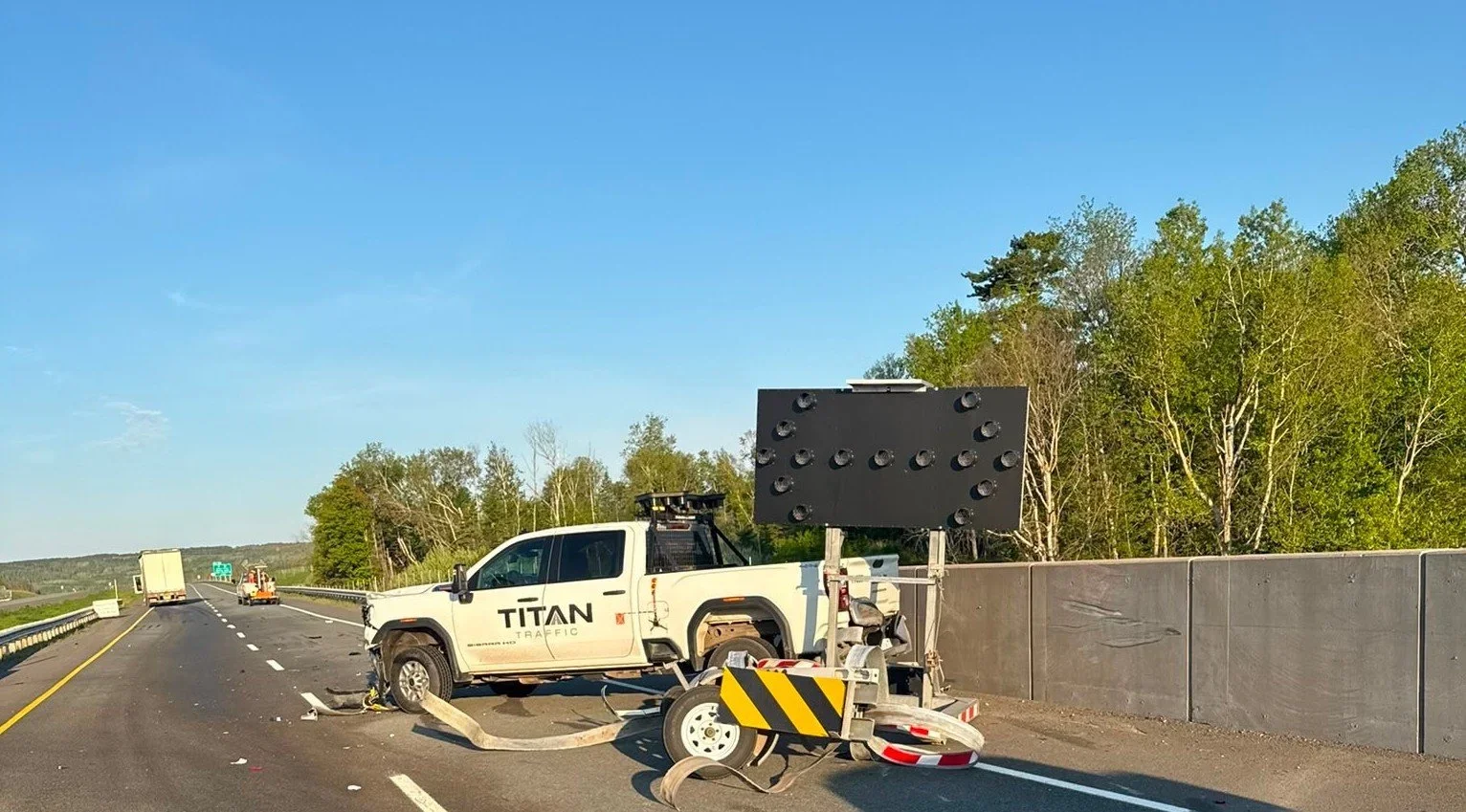
Cones, drums, signs, arrow boards, and other channelizing devices can help define temporary travel paths. Clear, consistent guidance reduces confusion and helps drivers move more smoothly through unfamiliar roadway configurations.
Monitor traffic queues as conditions change
A traffic control plan isn’t something you set up once and leave unchanged. Traffic conditions can shift throughout the day because of changing volumes, nearby incidents, weather, or construction activity.
Monitor queue lengths and traffic flow throughout the work period. If backups are regularly longer than expected, review the traffic setup and make adjustments where appropriate.
Manage construction vehicle access
Construction vehicles entering and exiting the work zone can cause delays if their movements aren’t carefully coordinated. A truck entering live traffic can force other vehicles to slow, even when the rest of the work zone is flowing normally.
Choose entry and exit points carefully and, when possible, schedule construction vehicle movements outside the busiest traffic periods. Qualified traffic control personnel can also help coordinate vehicle movements while minimizing disruption to public traffic.
Use technology to support work zone traffic management
Technology can help crews monitor road conditions, respond to changes in the work zone, and keep drivers informed about traffic changes ahead.
Right Traffic’s Guardian SmartFlagger, for example, allows crews to control traffic remotely while monitoring the work zone through real-time video. It can also share work zone information with navigation platforms such as Google Maps and Waze, helping give drivers advance notice of upcoming work zones and road closures.
Update traffic control as construction progresses
Highway construction moves through different phases, and your traffic control setup should change with it. What works during excavation may not be suitable once paving or other work begins.
Review your signage, lane configuration, and equipment placement as the project progresses and whenever site conditions change. Making timely adjustments can help prevent recurring bottlenecks and keep traffic moving more efficiently.
How professional traffic management helps keep highways moving
Effective highway traffic management depends on several elements working together. Planning, trained personnel, appropriate equipment, clear communication, and ongoing monitoring all affect how smoothly motorists can travel through a construction zone.
Working with an experienced traffic control services company can help you coordinate those elements. The right team can develop a traffic control plan based on the roadway and project requirements, supply the necessary equipment, support field operations, and adjust the traffic setup as construction moves into new phases.
Right Traffic works with contractors and agencies to plan and manage traffic control for highway construction projects. If you’re planning a project and want to reduce unnecessary delays while maintaining safe, efficient traffic flow, contact Right Traffic to discuss your project requirements.
Frequently asked questions
What traffic control equipment can help reduce congestion in highway work zones?
Arrow boards and message boards can help direct traffic and communicate changing conditions. Cones, drums, barricades, and other channelizing devices help define temporary traffic paths and separate vehicles from work areas.
Automated flagger assistance devices can also support alternating traffic control while reducing the need for workers to stand near moving traffic.
How can technology improve traffic management in highway work zones?
Technology can support real-time monitoring, remote traffic control, and driver communication. These tools can also help traffic teams identify congestion sooner and respond more effectively to changing conditions.
When is the best time to schedule lane closures during highway construction?
Off-peak hours and overnight work generally cause less disruption because traffic volumes are lower. Reviewing traffic count data can help you identify lower-volume periods and determine the best times to schedule lane closures.
How far in advance should drivers be warned about a highway work zone?
Drivers should receive enough advance warning to slow down and prepare for changing traffic conditions. The appropriate warning distance depends on factors such as roadway type, traffic speed, and applicable traffic control requirements.
How often should a traffic control plan be updated during a project?
Review the traffic control plan as construction progresses, especially when the project enters a new phase or site conditions change. This helps ensure the traffic setup continues to match current roadway and work zone conditions.
