
Construction projects that affect roadways need proper traffic control equipment to protect workers, guide drivers, and maintain safe traffic flow. However, deciding whether to rent or buy that equipment depends on factors such as project duration, budget, and how often you’ll need it.
Renting offers flexibility and lower upfront costs, while buying provides long-term ownership and ready access for recurring work. Understanding the trade-offs can help you manage costs, avoid unnecessary purchases, and keep projects running smoothly.
Key factors to consider before renting or buying traffic control equipment
Before making a decision, consider how you will use the equipment across current and upcoming projects. The following factors can help you determine which option makes financial and operational sense.
Project duration and frequency of use
Contractors handling occasional road repairs, temporary closures, or seasonal work may benefit from renting traffic control equipment rather than maintaining a permanent inventory.
However, if your company handles ongoing construction work, buying the equipment you use regularly may be more cost-effective. Reviewing past projects and upcoming schedules can help you determine whether you'll use the equipment often enough to justify purchasing it.
Upfront costs vs. long-term expenses
Purchasing traffic control equipment requires a larger initial investment, which can reduce the funds available for other project needs. Renting typically involves smaller upfront payments, which can help you manage cash flow.
You should also consider how each option fits into your company's budget. Rental costs are generally easier to assign to individual projects, while purchased equipment becomes a business asset you can use across multiple jobs.
Compare total rental costs with the costs of purchasing, maintaining, storing, and transporting equipment to see which option makes the most financial sense for your business. Potential resale value should also factor into your decision.
Maintenance, storage, and transportation
Owning traffic control equipment means taking responsibility for regular inspections, maintenance, storage, and transportation between job sites. You'll also need to ensure the equipment remains functional, visible, and ready for use.
Renting can simplify some of these responsibilities, depending on your rental agreement. Rental providers may handle certain maintenance activities, but you should confirm your responsibilities for equipment care, delivery, pickup, and returns.
Equipment availability and changing project needs
Traffic control requirements can change as construction progresses. Changes in lane closures, traffic patterns, or work zone layouts may mean you need different quantities or types of equipment.
Renting allows you to adjust your inventory as project requirements evolve, subject to supplier availability. However, equipment shortages and delivery schedules can affect access, so advance planning is important.
Owning essential equipment gives you greater control over its availability, helping your crews prepare for scheduled work without relying entirely on outside suppliers.
Which traffic control equipment is better to rent or buy?
Different types of equipment come with different costs, maintenance requirements, and usage patterns. Understanding these differences can help you decide which equipment to rent and which to buy.
Traffic cones, drums, and barricades
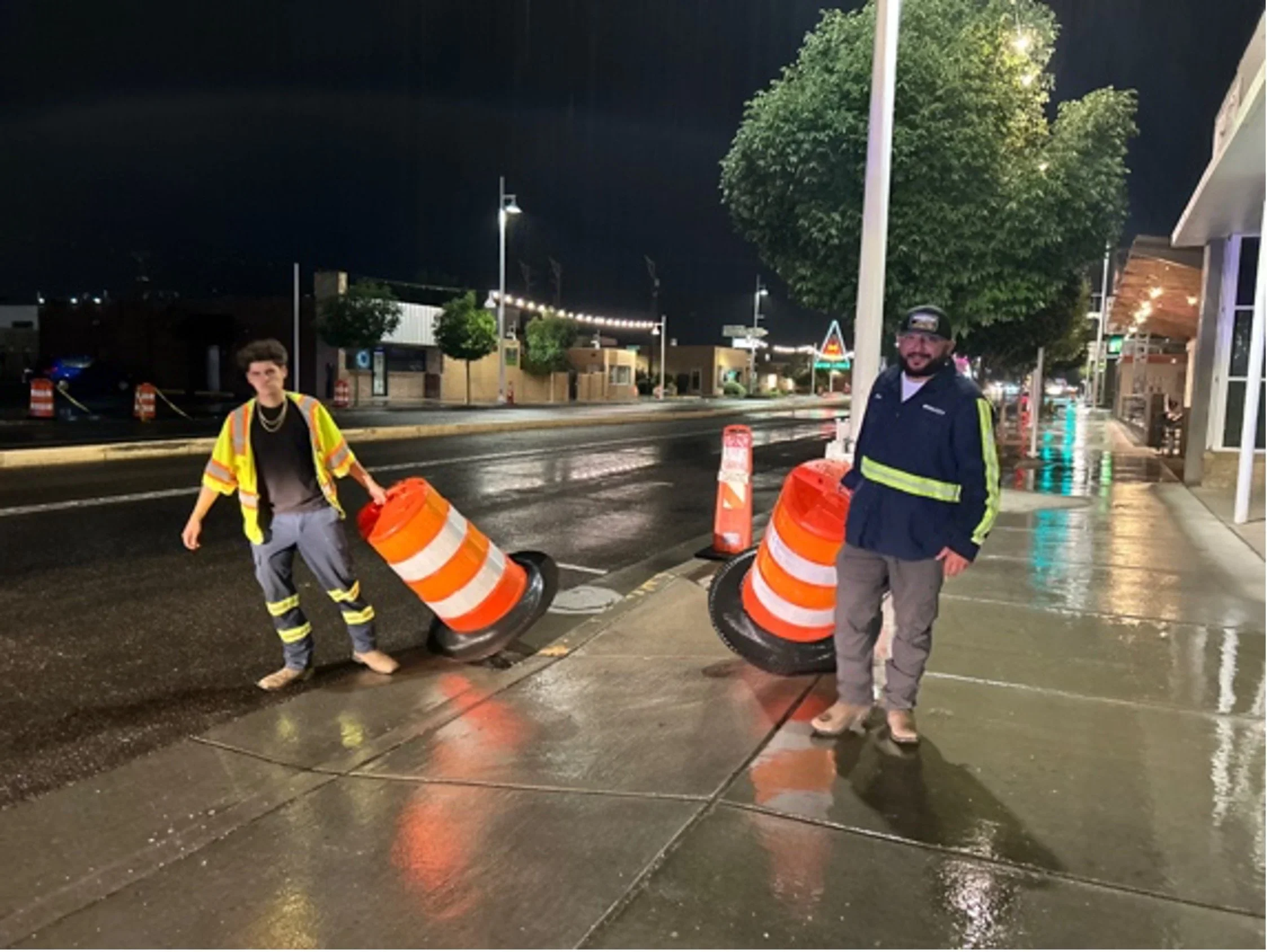
Traffic cones, drums, and barricades are commonly used to guide vehicles, mark construction areas, and separate traffic from active work zones.
If you handle ongoing projects, purchasing these items may be practical, especially if you use them regularly. Owning them gives you convenient access and reduces the need to arrange rentals for every job.
However, renting this traffic safety equipment can still make sense if you need extra supplies for a short period or have limited storage space.
Portable message boards and arrow boards
Portable message boards communicate warnings, lane closures, and changing road conditions. Arrow boards provide directional guidance for drivers approaching lane closures and other temporary traffic arrangements.
These devices can be expensive to purchase, transport, and maintain. If you only need them occasionally, renting may help you manage costs without making a large upfront investment.
However, buying may make sense if you use these devices regularly across multiple projects.
Truck-mounted attenuators and specialized equipment
Truck-mounted attenuators (TMAs) help protect workers and motorists by absorbing impact energy during certain collisions. These vehicles require significant investment, ongoing maintenance, and proper operation.
Renting a TMA can be practical for temporary or occasional use. It can also help you avoid purchasing specialized vehicles that sit idle between jobs.
If your projects frequently require TMAs, compare total ownership costs with long-term rental expenses before deciding.
Ultimately, you don't have to choose between renting and buying all your traffic control equipment. You can purchase frequently used items, such as traffic cones and barricades, while renting specialized equipment like message boards or TMA trucks as needed. This allows you to keep essential equipment on hand while accessing additional resources for specific projects.
What should contractors check before renting or purchasing equipment?
Before committing, confirm that the equipment meets your project’s safety and operational requirements. Review the following details to help avoid problems during work zone setup and use:
Safety and compliance: Check that the equipment meets applicable Manual on Uniform Traffic Control Devices (MUTCD) standards and state Department of Transportation (DOT) requirements.
Equipment condition: Inspect the equipment for visible damage, worn reflective materials, missing components, or operational issues that could affect its performance.
Supplier reliability: Choose a supplier that provides clear product information, responsive customer support, and has the equipment you need readily available.
Rental or purchase terms: Review delivery and pickup arrangements, maintenance responsibilities, return conditions, warranties, and any additional fees that apply.
Find the right traffic control equipment for your project
Choosing whether to rent, buy, or combine both approaches comes down to your workload, budget, and ability to maintain and store equipment. Reviewing these factors early can help you secure the equipment you need and manage costs throughout your project.
Right Traffic offers equipment rentals, products for purchase, and professional traffic control services to support a range of project requirements. Contact our team to discuss your equipment needs and explore options for your next project.
Frequently asked questions
What traffic control equipment should contractors rent?
Contractors may benefit from renting cones, barricades, arrow boards, message boards, and specialized equipment when their needs are temporary, storage is limited, or purchasing is impractical.
Is renting traffic control equipment more cost-effective?
Renting can be more economical for short projects or occasional use because it reduces upfront investment and may limit maintenance and storage expenses.
Can contractors rent traffic control equipment for long-term projects?
Yes. Long-term rentals may be available depending on equipment availability and rental terms. Contact Right Traffic to discuss options for your project.
Are maintenance costs included in traffic control equipment rentals?
It depends on your rental agreement. Before renting, check who's responsible for maintenance, repairs, equipment replacement, and any potential damage fees.
Can contractors combine rented and purchased traffic control equipment?
Yes. Purchasing frequently used equipment and renting specialized items as needed can help you balance equipment availability, flexibility, and cost.