
Work Zone Protection; When the Right Setup Makes the Difference
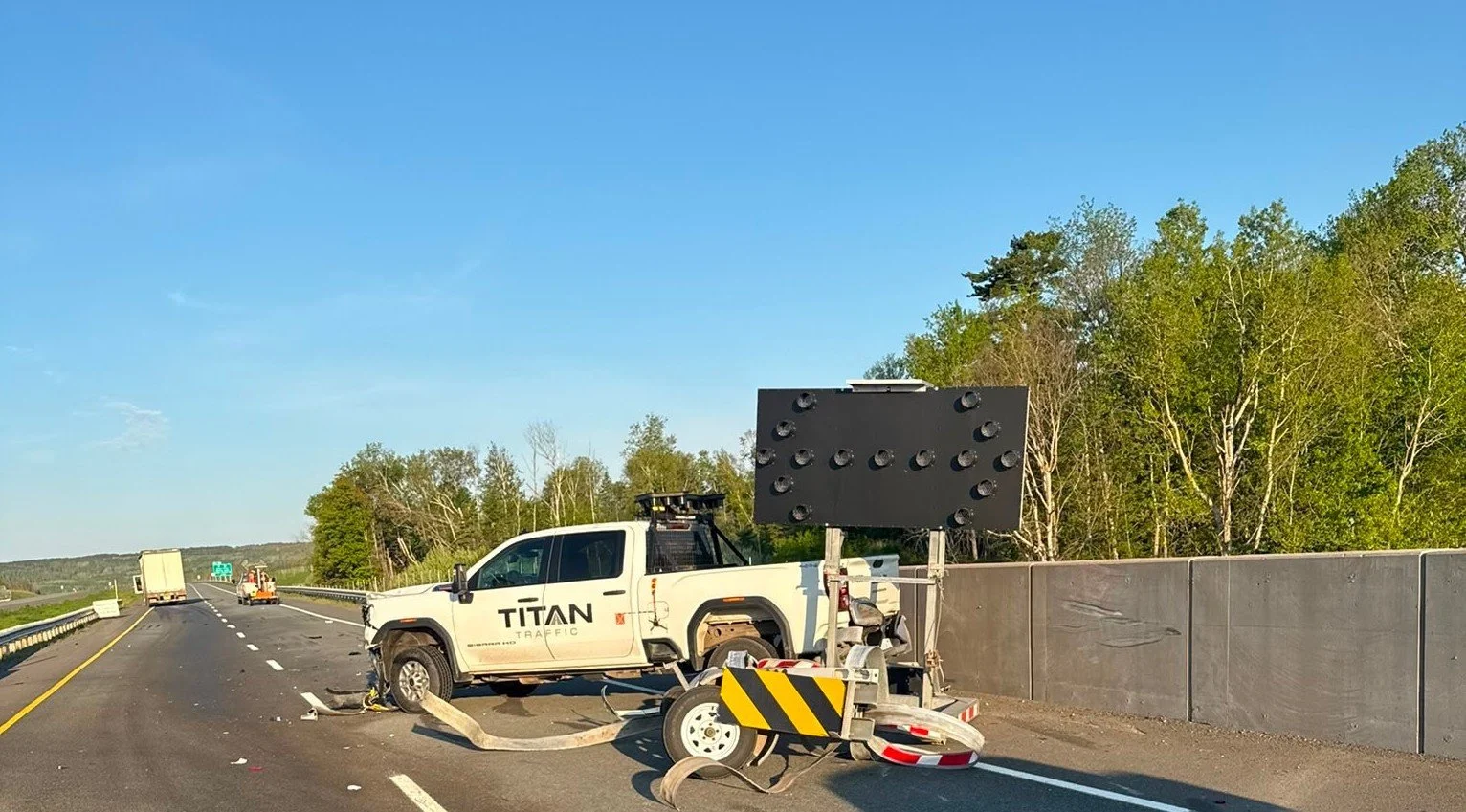
A real incident from the Trans-Canada Highway and a reminder of why proper work zone protection matters.
When Seconds Matter, The Right Setup Saves Lives
A transport truck struck our TMA and work vehicle on the Trans-Canada Highway. Because the TMA was properly positioned, it absorbed the impact, protected the work zone, and our driver walked away unharmed.
Without the right equipment and setup, this incident could have had a very different outcome. The right equipment. The right setup. The reason everyone went home.
So, why we are sharing this? Not as a sales message, but as a field-level reminder that work zone protection is a system. Planning, positioning, equipment selection, communication, and discipline all matter when live traffic is moving beside crews.
What This Incident Reinforced
Thankfully, our driver walked away unharmed. That outcome reinforced something every road builder, utility contractor, municipal team, and traffic control crew already understands: the details of the setup matter.
A properly deployed TMA is not just another piece of equipment on the job. It is part of a layered protection system designed to reduce the severity of an impact and help preserve the work area when something goes wrong.
1. Protection starts before the crew arrives
The safest setups begin with planning. Traffic volumes, road speed, sight distance, lane configuration, work duration, and crew exposure all influence the equipment and layout required.
2. Equipment must match the exposure
High-speed roads and live-lane work require more than a basic setup. TMAs, proper signage, clear tapers, buffer areas, and properly positioned vehicles create layers of protection.
3. Positioning is critical
Equipment only works as intended when it is placed correctly. The right spacing, orientation, and buffer can determine whether an impact is absorbed before it reaches the work area.
4. The setup is a system
Signs, trucks, attenuators, traffic control personnel, communication, and site supervision all work together. When each layer is treated seriously, risk is reduced for workers and the travelling public.
A Note to Our Crews, Customers, and Partners
We are grateful this incident ended with our driver going home unharmed. We are also grateful for the people who take work zone protection seriously every day—the crews setting up the zone, the planners building the layout, the supervisors checking the details, and the customers who support doing the job properly.
When traffic control is planned early and properly resourced, everyone benefits. Crews are better protected, projects run more smoothly, and the public receives clearer guidance through active work areas.
The right equipment. The right setup. The reason everyone went home.